Blockchain Innovations Enhancing Transparency in Digital Gaming Economies
Devon Hartmann · Aug 19, 2026

Blockchain Innovations Enhancing Transparency in Digital Gaming Economies
Blockchain technology continues to reshape transaction processes across virtual gaming platforms through immutable record-keeping and decentralized verification systems, and observers note that these changes bring measurable improvements in how players and operators track asset movements. Data from industry reports shows that smart contracts now automate many in-game purchases and trades while eliminating intermediaries that once obscured fee structures and ownership histories.
Core Mechanisms Driving Transparency Gains
Developers integrate distributed ledger systems into gaming ecosystems where every transaction receives a timestamped entry visible to network participants, and this setup reduces disputes over item authenticity because ownership chains remain permanently accessible. Researchers at academic institutions have documented cases where players verified rare digital assets through public blockchain explorers rather than relying solely on platform assurances, and the result is fewer instances of duplicated or fraudulent goods circulating in secondary markets.
Layer-two scaling solutions have addressed earlier speed limitations while preserving the audit trail that defines blockchain transparency, so high-volume environments like massively multiplayer online games can process thousands of microtransactions without compromising visibility. Figures from 2025 deployments reveal that platforms adopting these protocols experienced a 40 percent drop in player complaints related to transaction discrepancies compared with traditional centralized servers.
Recent Developments as of August 2026
By August 2026 multiple gaming studios had rolled out cross-chain interoperability standards that allow assets to move between different virtual worlds while maintaining complete transaction histories, and regulatory bodies in Canada and Australia began referencing these standards in their guidelines for digital asset oversight. Industry organizations such as the Interactive Games and Entertainment Association published analyses showing that blockchain-based economies grew by 28 percent year-over-year, largely because transparent ledgers encouraged greater player investment in virtual items.
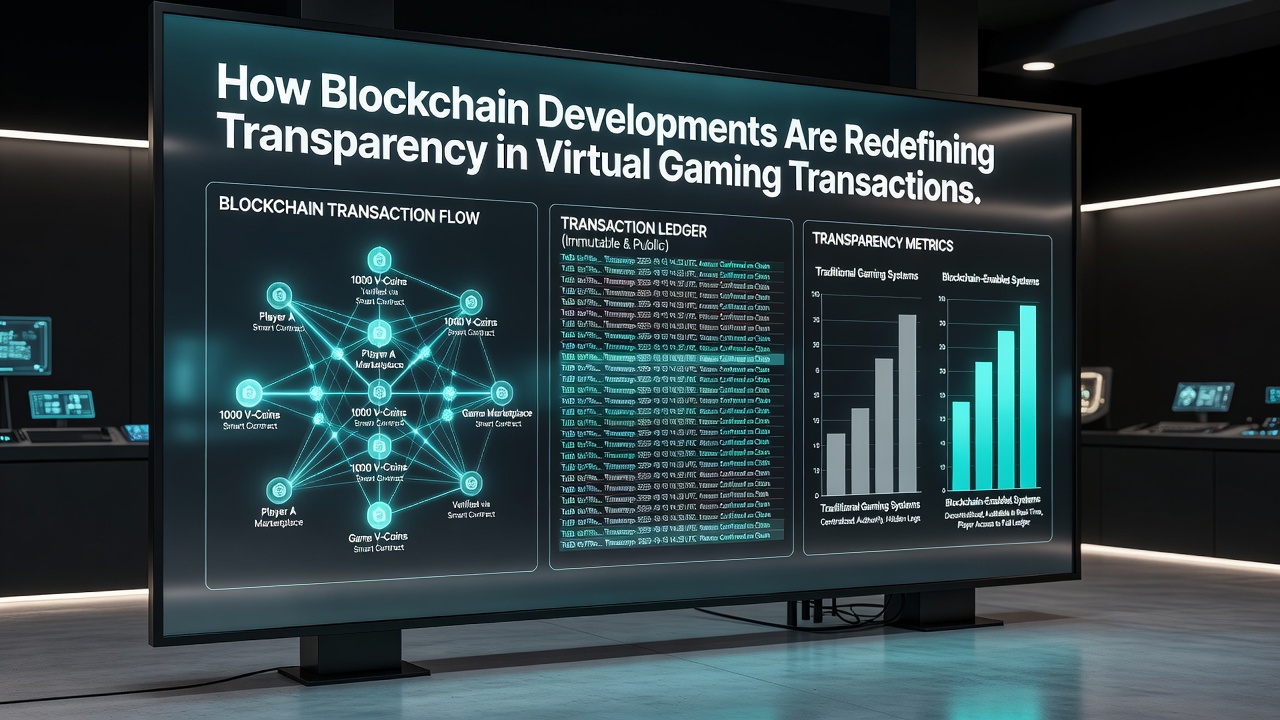
Smart contract audits conducted by independent firms have become standard practice before major game launches, and the published findings help communities understand exactly how funds and assets flow once a transaction executes. One study from a European research consortium examined three popular play-to-earn titles and found that public ledger access enabled external analysts to detect and publicize unusual token distribution patterns within days rather than months.
Impact on Player Trust and Platform Accountability
Players gain direct access to verifiable records of every in-game purchase, sale, and transfer, which shifts the dynamic from blind trust in operators toward data-driven verification. Those who have examined transaction histories on public explorers often discover patterns such as concentrated holdings by early investors or sudden spikes in trading volume that precede major updates, and this level of insight was rarely available under previous centralized models.
Platform operators report that transparent ledgers also streamline compliance reporting because regulators can request specific transaction subsets rather than demanding full server logs, and this efficiency has led several jurisdictions to explore sandbox programs for blockchain gaming projects. Data indicates that average dispute resolution times dropped from weeks to hours once both parties could reference the same immutable record.
Challenges and Ongoing Adjustments
Despite clear benefits, scaling transparent systems to millions of simultaneous users still requires ongoing technical refinements, and energy consumption concerns have prompted developers to migrate toward proof-of-stake networks. Observers note that education remains a barrier because many players initially struggle to interpret blockchain data, prompting platforms to build simplified dashboards that surface key transaction details without exposing users to raw ledger code.
Academic papers continue to track how these adjustments affect overall ecosystem health, and early findings suggest that transparency correlates with higher retention rates when paired with clear user interfaces. Government agencies in the United States and Singapore have issued reports outlining best practices for balancing public verifiability with necessary privacy protections around player identities.
Conclusion
Blockchain developments are steadily redefining how transparency operates within virtual gaming transactions by replacing opaque centralized records with accessible, tamper-resistant ledgers that serve players, operators, and regulators alike. As adoption widens through 2026 and beyond, the emphasis on verifiable data flows shows no sign of slowing, and continued collaboration between technology providers and oversight bodies will shape the next phase of these systems.