Emerging Markets Regulatory Shifts Reshape Slot Game Release Strategies
Devon Hartmann · Aug 12, 2026

Emerging Markets Regulatory Shifts Reshape Slot Game Release Strategies
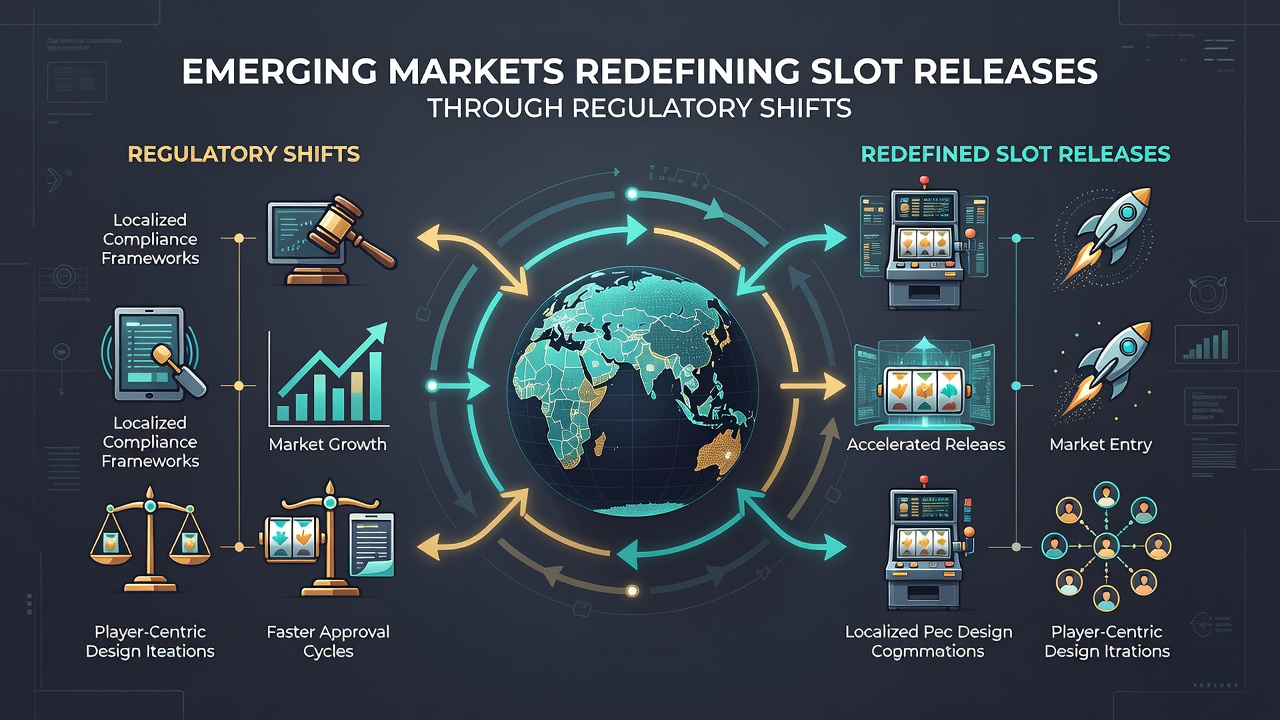
Regulatory frameworks across Latin America, Southeast Asia, and parts of Africa continue to evolve at a steady pace, and slot game releases now follow approval pathways that differ sharply from those in established markets. Data from multiple jurisdictions shows that new licensing requirements, mandatory localization rules, and responsible gaming mandates have extended development timelines while altering the technical specifications providers must meet before launch.
Brazil's 2024 legalization of online gambling created one of the largest single market openings in recent years. By August 2026 additional compliance layers, including real-time transaction monitoring and Portuguese-language certification, are scheduled to take effect under the Ministry of Finance oversight. Providers have responded by building modular codebases that allow rapid insertion of jurisdiction-specific features without restarting the entire certification process each time a new rule appears.
Key Regulatory Changes Across Regions
India's state-level variations present another distinct pattern. Certain states permit skill-based slot variants while others maintain outright prohibitions, forcing operators to maintain separate release schedules and geo-fencing protocols. Industry reports indicate that average time from initial submission to commercial launch in compliant Indian states now exceeds nine months, compared with four to five months in more mature European markets.
Southeast Asian regulators in Vietnam and the Philippines have introduced similar requirements for local server hosting and data residency. These rules compel slot developers to redesign backend architectures, often integrating with national payment systems that did not exist five years earlier. Observers note that providers who invested early in regional compliance teams reduced their release delays by roughly 30 percent.
Effects on Development Pipelines
Slot studios have shifted resources toward configurable game engines that accommodate multiple regulatory profiles from a single core build. Features such as dynamic volatility adjustments, built-in session limits, and automated tax reporting modules now appear in technical specifications before creative work begins. Research from gaming technology conferences shows that 65 percent of new titles scheduled for 2026 already contain at least three jurisdiction-specific compliance hooks.
Testing protocols have grown more rigorous as well. Regulators in several African nations now require independent third-party audits that cover both game mathematics and player fund segregation. One study released by a Johannesburg-based research institute documented a 40 percent increase in pre-launch testing hours between 2023 and 2025.
Case Examples From 2025-2026
Take the rollout of a popular five-reel title in Kenya last year. The developer submitted the game in March 2025, received initial feedback requesting adjustments to loss-limit notifications in July, and finally launched teh product in November after incorporating local currency display standards. Similar sequences have become standard rather than exceptional across multiple emerging jurisdictions.
Providers that once relied on a single global release date now maintain staggered calendars. Internal planning documents shared at industry events reveal that teams allocate separate sprint cycles for Brazilian certification, Indian state approvals, and Southeast Asian data-localization checks, each running in parallel but with distinct milestone dates.
Industry Adaptation Patterns
Trade associations representing game developers have begun publishing compliance playbooks tailored to individual countries. These documents outline required documentation, expected review durations, and common rejection reasons. Companies that adopted such playbooks early reported fewer resubmissions during the certification phase.
Academic papers examining regulatory impact on innovation note that while release cycles lengthen, the overall number of titles entering emerging markets continues to rise. The increase stems from larger addressable player bases rather than faster production speeds. Figures compiled by regional economic forums indicate slot revenue in tracked emerging markets grew 22 percent year-over-year through the first half of 2025.
Conclusion
Regulatory shifts in emerging markets have established new benchmarks for slot game releases, requiring providers to integrate compliance considerations at every stage of development. Jurisdictions continue to refine their frameworks, and companies that maintain flexible technical architectures and dedicated regional teams have demonstrated the ability to navigate these requirements more efficiently. The pattern suggests that future releases will depend as much on regulatory navigation as on creative design.